How to qualify leads before a sales call: BANT vs MEDDIC for small teams
Every call with someone who could never buy is an hour you did not spend with someone who could. What BANT and MEDDIC each check, which one suits a small team, the questions to ask, and when to walk away.
 By
9 min read
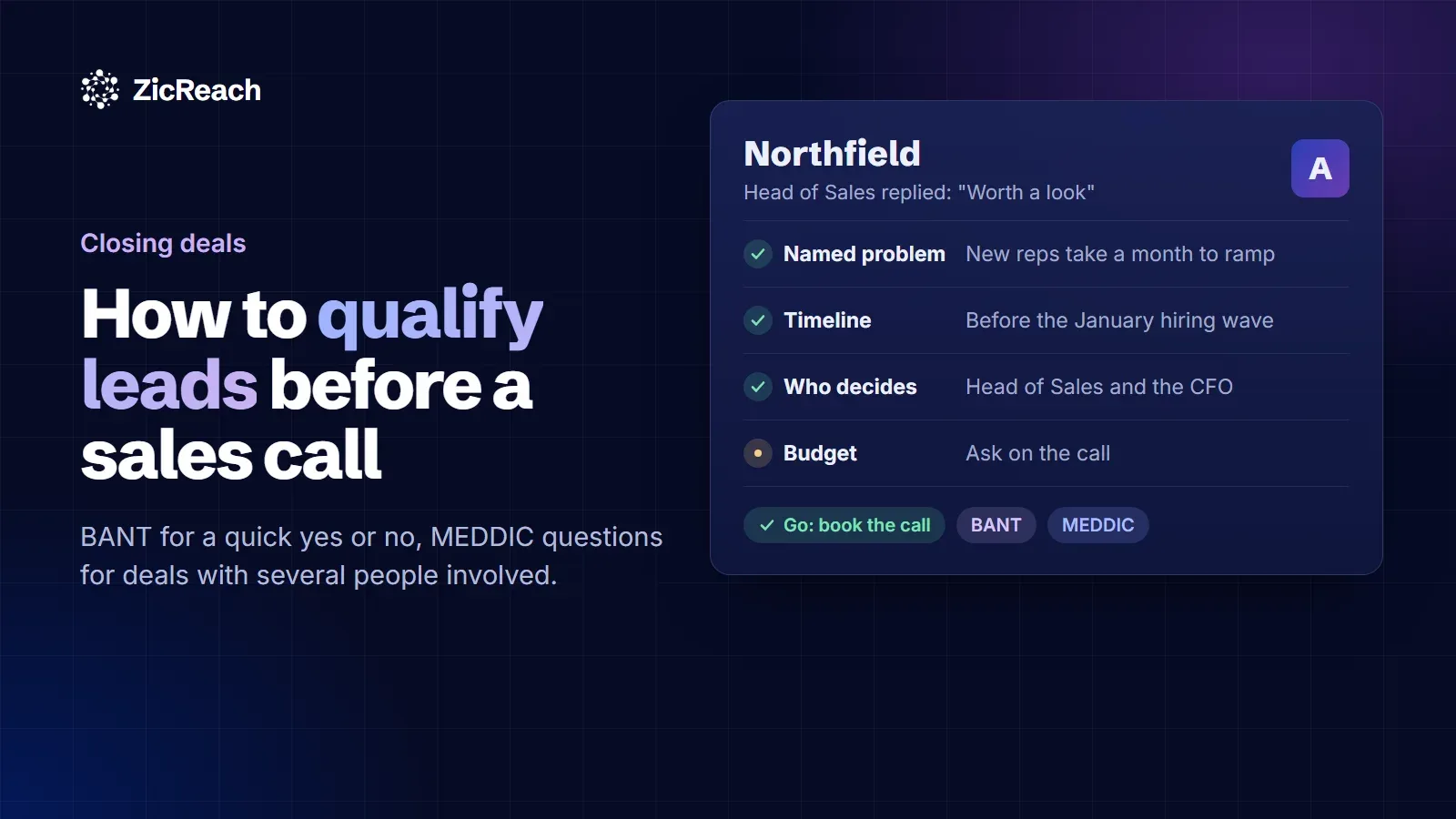
To qualify a sales lead, check four things before you invest real time: they have the problem you solve, it matters enough to act on soon, the person can reach whoever signs, and there is a realistic way for them to buy. BANT covers those quickly for small, simple deals. MEDDIC adds the depth you need when several people sign off, and most small teams do best with a light BANT check before the call and a few MEDDIC questions during it.
Qualification has a reputation as a box ticking exercise for big sales teams. For a small team it is the opposite: it is how you protect the few hours a week you have for calls. Every demo with someone who could never buy is an hour you did not spend with someone who could.
What does it mean to qualify a lead?
Qualifying a lead means deciding, with evidence, whether a person and their company are likely to buy from you, and how much effort they deserve. It happens in two places:
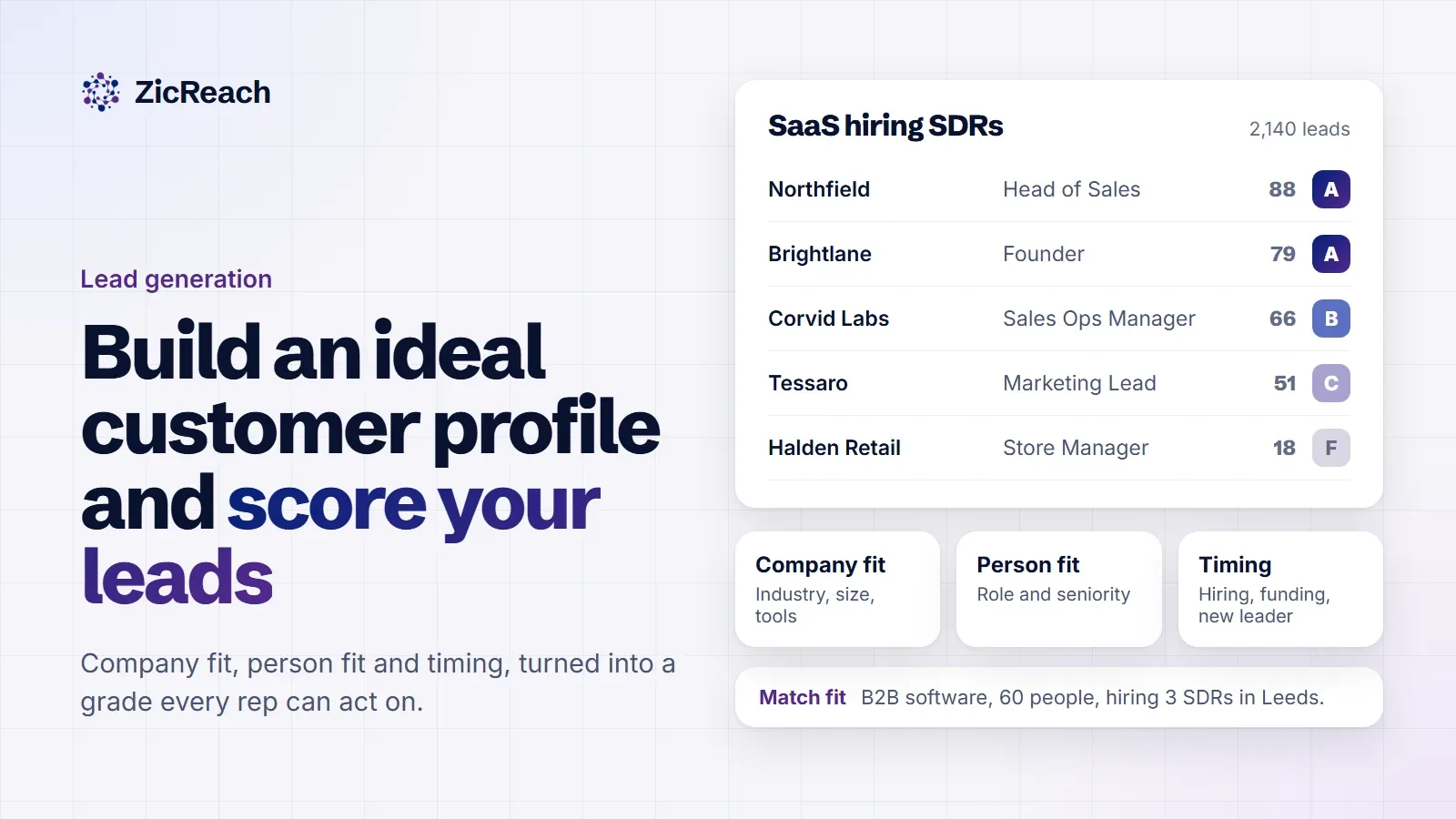
- Before contact, when you decide who to email at all. This is fit: company, role and timing. Our guide on building an ideal customer profile and scoring leads covers it in detail.
- After they respond, when you decide whether to book a call, what the call is for, and whether the deal is real. This guide is mostly about this second part.
You will see two labels for leads at this stage. A marketing qualified lead (MQL) has shown interest, such as downloading a guide or replying "tell me more". A sales qualified lead (SQL) has been checked by a person and is worth a sales conversation. Qualification is the step that turns one into the other, or rules it out.
Key numbers
| Number | Why it matters for qualification | Source |
|---|---|---|
| 28% | Share of a rep's week spent actually selling. Unqualified calls eat into a small slice. | Salesforce State of Sales |
| 6 to 10 | Typical number of people in the buying group for a complex B2B purchase. | Gartner |
| 67% | Share of B2B buyers who prefer a buying experience without a sales rep. | Gartner, March 2026 |
| 95% | Share of potential buyers who are not in the market at any given time. | LinkedIn B2B Institute and Ehrenberg-Bass Institute |
| Nearly 7 times | How much more likely firms were to qualify a lead when they contacted it within an hour. | Harvard Business Review |
What is BANT?
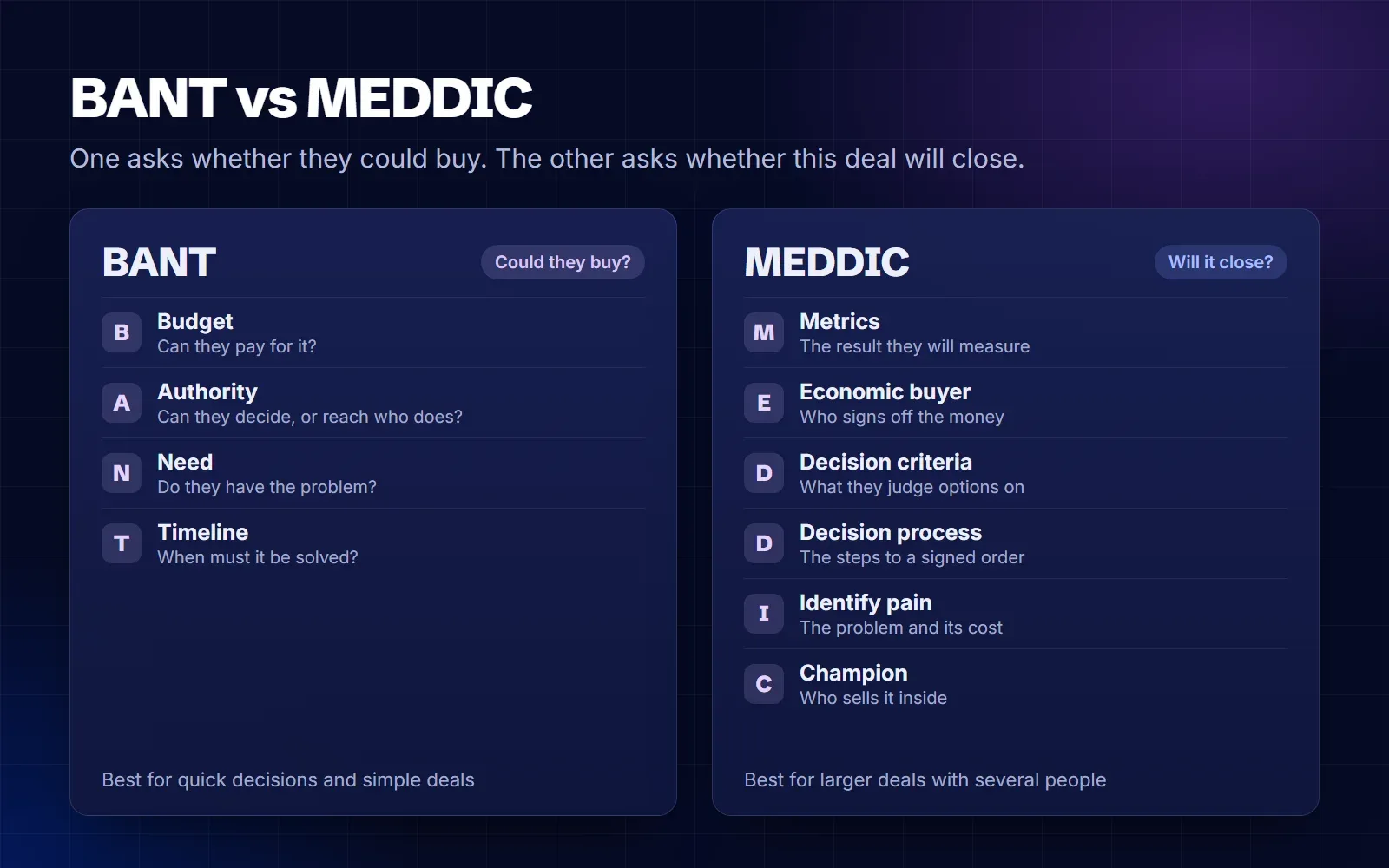
BANT is the oldest widely used qualification framework, developed at IBM. It asks four questions:
- Budget: can they pay for this?
- Authority: is this person the decision maker, or can they reach them?
- Need: do they have the problem you solve, and does it hurt?
- Timeline: when do they need it solved?
BANT is fast and easy to teach, which is why it has lasted. Its weakness is the order. Asking about budget in the first five minutes of a call feels like a gatekeeper's checklist, and many buyers do not have a budget for a problem until someone shows them it is worth solving. In practice, most teams that use BANT well start with need and leave budget until there is something to price.
What is MEDDIC, and how is MEDDPICC different?
MEDDIC was created at PTC in the 1990s, by Dick Dunkel with Jack Napoli and John McMahon, for complex enterprise deals. It is less about whether someone could buy and more about whether this specific deal will close. The letters stand for:
- Metrics: the measurable result the buyer expects, such as hours saved or meetings booked.
- Economic buyer: the person who controls the money and can say a final yes.
- Decision criteria: what they will judge options on.
- Decision process: the steps and people between "we like it" and a signed order.
- Identify pain: the problem behind the purchase and what it costs them.
- Champion: someone inside who wants this to happen and will sell it when you are not in the room.
MEDDPICC adds two more: Paper process (legal, security and procurement steps) and Competition (including the option of doing nothing). Those extra letters matter most once deals involve contracts and security reviews.
BANT vs MEDDIC: which should a small team use?
Both are useful, at different stages. Here is how they compare, with CHAMP, a newer variant that leads with the buyer's challenges.
| BANT | CHAMP | MEDDIC | |
|---|---|---|---|
| Best for | Quick yes or no on inbound and early replies | Conversations that start from a problem | Larger deals with several people involved |
| Typical deal | Simple, one or two decision makers | Simple to mid size | Mid size to enterprise, longer cycles |
| Leads with | Budget | Challenges | Metrics and pain |
| Time to run | 5 to 10 minutes | 10 to 15 minutes | Builds over several calls |
| Main weakness | Feels like an interrogation if asked in order | Light on the buying process | Too heavy for small, fast deals |
For a small team selling deals that close in weeks, not quarters, a practical mix works well: use need, authority and timeline to decide whether to book the call, then use the pain, metrics, champion and decision process questions on the call to decide whether the deal is real. You do not need every letter for every lead.
How do you qualify a lead before a sales call? Step by step
Here is a routine that takes about ten minutes per lead and saves far more than that in wasted calls.
- Check fit first. Is the company in your ideal customer profile and the person in a role that feels the problem? If your leads are already graded, start with A and B leads and question anything lower.
- Read the reply carefully. "Interesting, tell me more" and "We are reviewing tools for this next month" are very different signals. Look for a named problem, a date or a colleague.
- Do five minutes of research. Their website, recent news, open job posts and the tools they use. You are looking for evidence of the problem and a reason it might matter now.
- Ask one or two questions by email before booking. For example: "What made this worth a reply now?" and "Is anyone else involved in looking at this?" The answers tell you more than any score.
- Set the purpose of the call. Send a one line agenda: "15 minutes to understand how you handle X today and see whether we can help. If not, I will say so." This makes it easy to have an honest conversation.
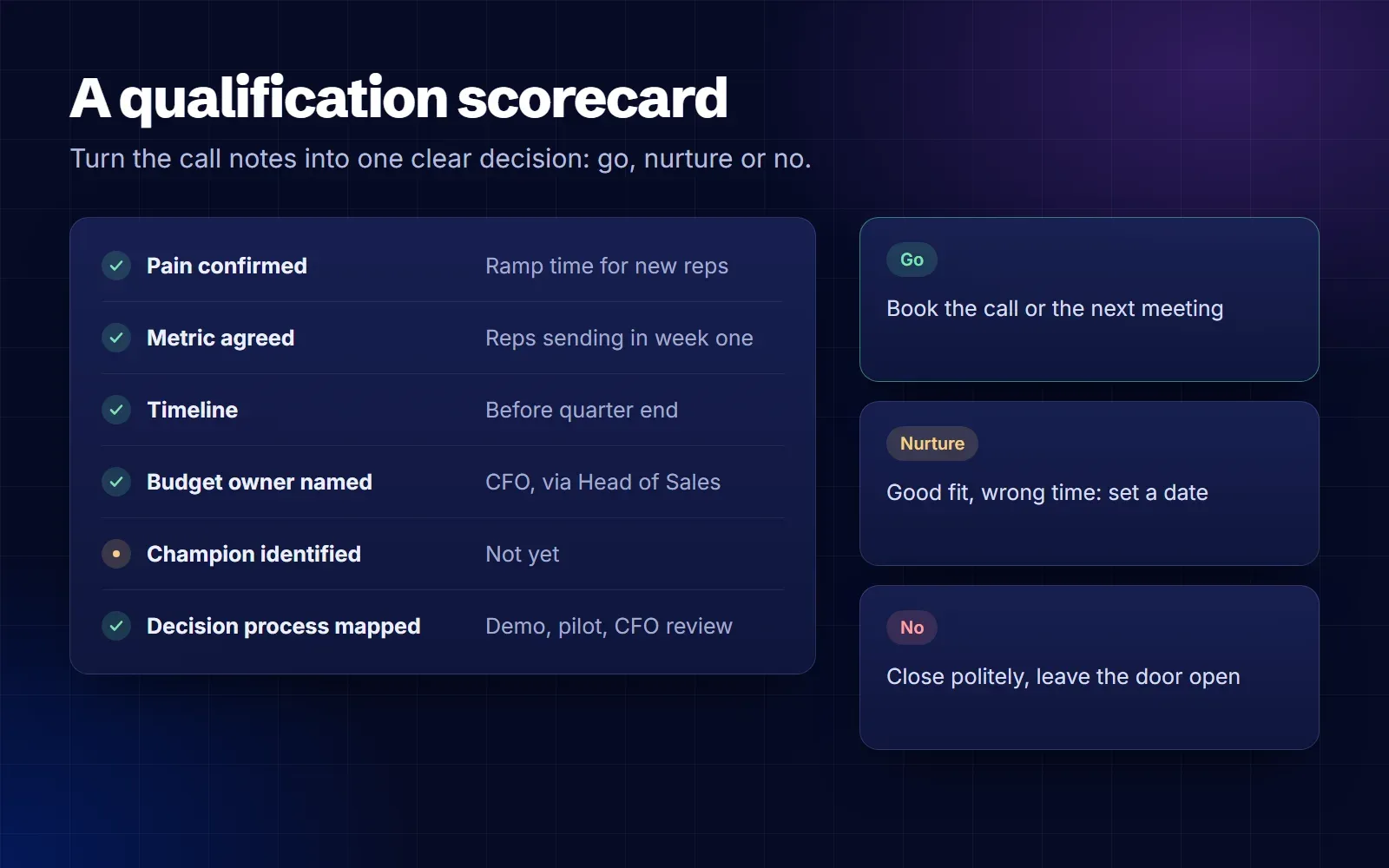
- Decide go, nurture or no. Go means book the call. Nurture means a real fit with no current need: note why, and set a date to come back. No means a polite, clear exit.
What questions should you ask on a qualification call?
Good qualification questions sound like curiosity, not an audit. These cover the important letters without reading like a form:
- Pain: "How are you handling this today, and what is the part that bothers you most?"
- Metrics: "If this worked, what would be different in three months? How would you measure it?"
- Timeline: "Is there a date that makes this more urgent, such as a launch, a hire or a target?"
- Authority and process: "Apart from you, who would want a say? What happened the last time you bought a tool like this?"
- Champion: "If you decided this was right, how would you put it to your team?"
- Budget: "Is there a budget for this already, or would it come from somewhere else?"
- Competition: "What else are you looking at, including fixing it in house or leaving it as it is?"
Write the answers down in the buyer's own words. They become your follow up emails, your proposal and, later, the evidence for your next ideal customer profile.
When should you disqualify a lead?
Disqualifying feels like losing, but every dead deal you drop early gives time back to a live one. Clear signs to stop or park a lead:
- They cannot describe a problem you solve, even when asked directly.
- There is no date, no trigger and no cost to waiting.
- Your only contact has no way to reach the person who signs, and will not try.
- Their size, region or setup is one you have never made successful.
- They want a free consultation, not a product.
When you disqualify, say so kindly and leave the door open: "From what you have told me, I do not think we are the right fit today. If X changes, I would be glad to talk again." People remember that kind of honesty, and some of them come back.
Common qualification mistakes
- Qualifying on enthusiasm. A friendly, chatty contact is not the same as a buyer. Check for pain and process, not tone.
- Asking budget first. It shuts conversations down before the value is clear.
- Single threading. Talking to one person and assuming they speak for the company. With buying groups of several people, that is rarely true.
- Skipping the "nurture" bucket. Good fit, wrong time leads are your best pipeline next quarter. Keep notes and dates.
- Never checking the results. If deals you marked as qualified keep dying at the same stage, your criteria are missing something.
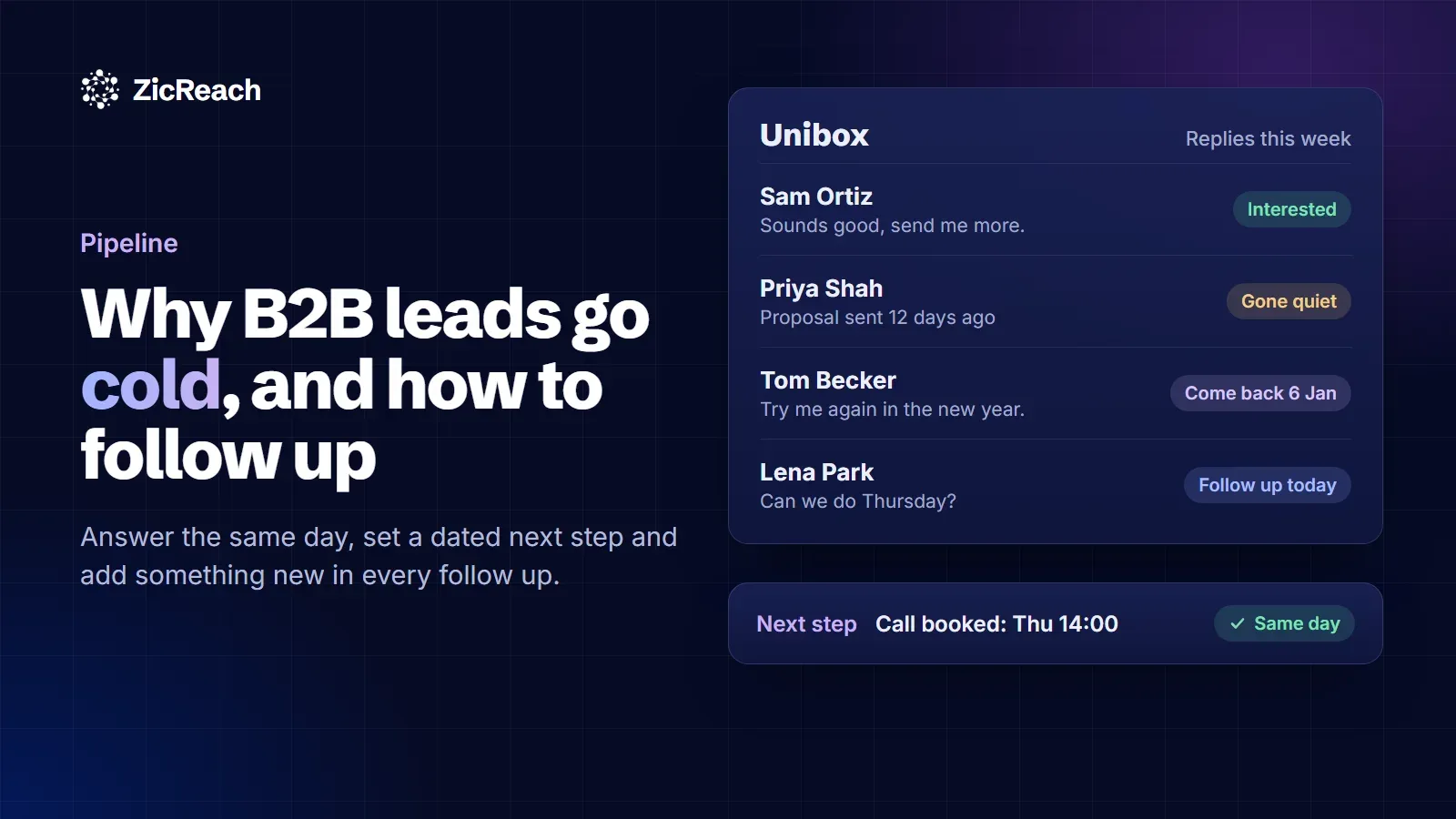
Qualification also depends on getting answers at all. If leads go quiet before you can ask a single question, read why B2B leads go cold after the first reply. If you are not getting enough replies to qualify, start with how to get more B2B sales meetings and check that your emails are not landing in spam with our guide on why cold emails go to spam.
Where ZicReach helps
ZicReach handles the fit part before you ever email. ZicAgent grades every lead in your tables from A to F against your business, with a one line reason, and the AI Leads Engine adds the research you would otherwise do by hand, such as open jobs and company signals.
Once replies come in, Unibox tags each one Interested, Neutral or Not interested, and Interested and meeting replies open an opportunity on the five stage CRM board. Your call notes sit on the deal, next to the full email thread, so the qualification answers are there when you write the follow up.
Questions people ask
What does BANT stand for?
BANT stands for Budget, Authority, Need and Timeline. It is a quick way to check whether a lead could buy: whether they can pay, can decide, have the problem and need it solved soon.
Is BANT still useful?
Yes, as a quick first filter, especially for simple deals. It works best when you start with need and leave budget until the value is clear, rather than asking the four questions in order.
What is the difference between MEDDIC and MEDDPICC?
MEDDPICC is MEDDIC with two extra checks: the paper process (legal, security and procurement steps) and the competition, including doing nothing. The extra letters matter most for larger deals with formal buying steps.
What is the difference between an MQL and an SQL?
A marketing qualified lead has shown interest, such as a reply or a download. A sales qualified lead has been checked by a person and confirmed as worth a sales conversation, with a real problem and a path to buying.
How long should a qualification call be?
Fifteen to twenty minutes is usually enough. If it needs longer, you are probably running a demo, which is fine, but say so in the invitation so the buyer can plan for it.
The short version
Qualify in two passes. Before contact, check fit and timing. After a reply, check pain, timeline and who decides before you book a call, then use the MEDDIC questions on the call to find out whether the deal is real. Disqualify kindly, keep good fit, wrong time leads in a nurture list with a date, and check every quarter whether your criteria predicted the deals you won.
To see your leads graded before you reach out, start ZicReach for free. The pricing page shows what each plan includes, and the sales teams page shows how teams split the work.
Put this into practice with ZicReach
Find leads, write the sequence and send from warmed inboxes in one place. Free to start, no card needed.
Start for free